
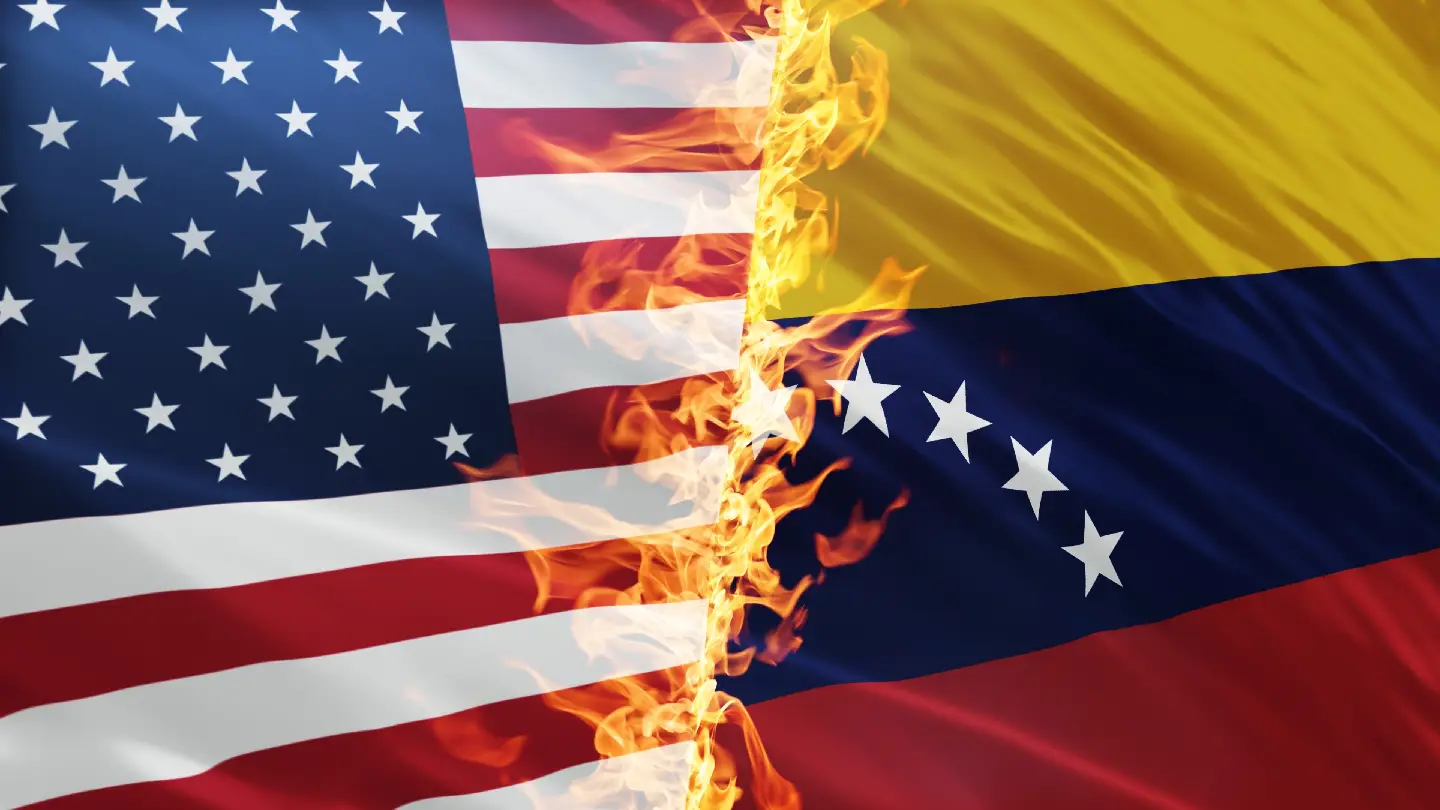
In early 2026, seismic shifts are underway in the global economy. Inflation remains stubbornly high across advanced nations; energy sovereignty has become a primary battleground for diplomatic rivalry; and signs of dedollarization—long-discussed—are accruing substance. Meanwhile, the U.S. government has taken decisive steps abroad to reinforce its economic and financial dominance, revealing that the U.S. dollar is still not merely a currency—it is power in motion.
The U.S.–Venezuela Confrontation: Dollars, Oil, and Leverage
Among the most dramatic recent developments is the United States’ aggressive posture toward Venezuela. Following a military operation that led to President Nicolás Maduro’s capture in early January 2026, the U.S. has moved quickly to assert control over Venezuelan oil, a global strategic resource. The White House revealed plans to take possession of 30 to 50 million barrels of sanctioned oil, route them to U.S. refineries, and control all future sales of Venezuelan crude “indefinitely.”
Key officials have underscored that the proceeds from these sales will be managed by the United States with the aim of benefiting both Venezuelans and Americans—but under conditions that maximize U.S. leverage. The U.S. Treasury has also widened sanctions on Maduro’s family, accomplices, and vessels tied to illicit oil transport.
These moves are about more than targeting a rogue regime. They are a clear demonstration of how the U.S. still uses dollar-denominated energy trade—and control over it—as a geopolitical instrument.
The Petrodollar’s Enduring Power
The modern petrodollar framework is central to U.S. financial hegemony. Its elements largely consist of:
- Global Reserve Currency Currency: Because oil exports are priced in dollars, oil-producing states hold vast stocks of USD. This maintains dollar supremacy among central banks.
- Recycling Surpluses: Surplus dollar revenues often flow back into U.S. Treasuries or investment, financing U.S. deficits while keeping interest rates lower than otherwise possible.
- Strategic Sanctions Utility: Control of oil flows—who gets oil, who gets paid, through what channels—serves as a potent tool for the U.S. to punish, pressure, and reshape regimes. The Venezuela case is the clearest in recent memory.
- Resistance Emerging: Yet, in response, some nations are increasingly pushing for alternative settlement currencies or bilateral barter mechanisms to sidestep dollar-based sanctions. The possibility of a future in which multiple currencies play regional or sectoral reserve roles is growing.
Introducing Our Petrodollar Deep-Dive Series
Given this moment of flux, understanding the petrodollar system’s past, its mechanisms, its pressures, and its possible futures is more urgent than ever. I’m pleased to announce a five-part blog series that will explore:
- The history behind the system: how petrodollars originated in the 1970s
- How they operate: trade, reserves, financial architecture
- Global effects: development, dependency, diplomacy
- Pressures and alternatives: dedollarization, energy transition, digital currencies
- Future scenarios: How this might all reshuffle global power
| Episode | Title | Key Focus Areas | Date of Release | Sequence |
| Episode 1 | From Bretton Woods to the 1970s Oil Shocks: Birth of the Petrodollar | Origins: end of Bretton Woods, U.S. oil diplomacy with Saudi Arabia, how and why petrodollar system emerged | 12-Jan-26 | Introduces foundational history |
| Episode 2 | Mechanics of the System: Dollar Hegemony | Ceremonies of trade, forex reserves, U.S. deficits, investment flow, role of OPEC, financial tools | 13-Jan-26 | After historical background |
| Episode 3 | Global Impact: Economics, Politics, and Geopolitics | Effects on global finance, developing countries, U.S. foreign policy, sanctions, alliances | 14-Jan-26 | Build on mechanics to show consequences |
| Episode 4 | De-Dollarisation, Alternatives, and Emerging Risks | Movement to trade in non-dollars, Saudi shifts, China, BRICS/SCO, petroyuan, digital currencies, climate and energy shifts | 15-Jan-26 | Current and near-term trends |
| Episode 5 | Future of Energy, Currency, and Global Order | Scenarios: petrodollar persists, partial collapse, multipolar currency world; implications for climate change, energy transition, U.S. role; what stakeholders need to watch | 16-Jan-26 | Synthesis & projections |
As the international order shifts, the dollar remains far more than legal tender—it is a strategic asset, still at the center of global leverage. Over the coming weeks, we will unpack how this asset came to matter so much, and what it will mean if the rules of the game change.